Remote work has grown quickly over the past few years.
Today, many companies allow employees to work from home or from anywhere. Because of this change, a fast and reliable internet connection is more important than ever.
One technology that makes this possible is fiber internet. It offers faster speeds and better reliability than many traditional connections. As a result, remote workers can stay connected, productive, and efficient throughout the day.
Let’s explore the remote work revolution and find out how fiber internet is making it all possible.
Table of Contents

What Internet Do I Need for Remote Work?
If you’re planning to start working remotely, your first question is likely, “What internet speed do I need?” A stable and fast internet connection is non-negotiable. But not just any internet will do; fiber internet is going to be the one to make sure everything goes well.
While cable or DSL internet can support basic browsing, fiber internet offers several advantages. For example, fiber provides symmetrical speeds, which means upload and download speeds are the same.
This is important because remote workers often upload files, join video calls, and use cloud software.
In addition, fiber internet helps ensure:
- Smooth video meetings
- Faster file uploads
- Reliable access to cloud tools
- Stable connections throughout the workday
Because of these benefits, fiber internet is becoming a top choice for remote professionals.

What is the Best Internet Speed for Remote Jobs?
Internet speed needs can vary depending on the type of work you do. However, most remote workers need faster speeds than basic internet plans provide.
For example, video calls, file sharing, and cloud apps require steady bandwidth.
Here are some general speed recommendations:
| Activity | Recommended Speed |
| Email and browsing | 25 Mbps |
| HD video meetings | 50–100 Mbps |
| Cloud work and file uploads | 100–500 Mbps |
| Multiple users working from home | 500 Mbps – 1 Gbps |
For most households, speeds between 100 Mbps and 300 Mbps work well.
However, fiber internet plans often offer gigabit speeds (1,000 Mbps). Because of this, multiple people in a home can work, stream, and browse without slowing down the network.
How Many GB of Internet Do I Need to Work from Home?
The amount of data you need for remote work largely depends on your daily tasks. A typical workday involves video conferences, emails, cloud document sharing, and more. However, these activities don’t consume as much data as you might think.
Video conferencing, for example, can use around 2-3 GB of data per hour for high-definition video. So, even if you’re in back-to-back meetings all day, you’ll likely use well under 10 GB. A standard home internet plan with a monthly data cap of 250 GB should comfortably cover your remote work needs.
It is always a good idea to explore local service providers that offer unlimited internet plans.

Fiber Internet: The Remote Work Enabler
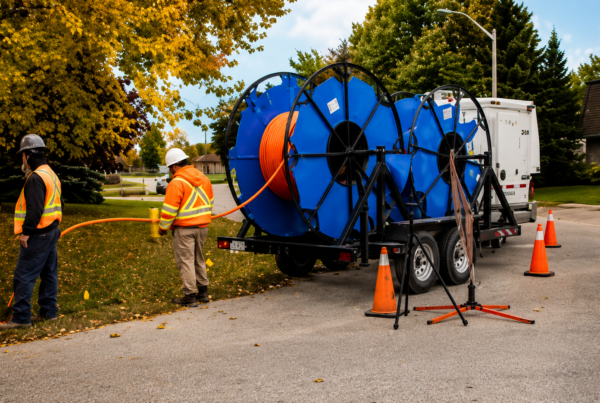
Fiber internet has quickly become the gold standard for home internet. Unlike older copper connections, fiber sends data through fiber-optic cables using light.
As a result, fiber connections offer several key benefits.
Faster Speeds
Fiber internet delivers extremely fast speeds. Therefore, remote workers can transfer large files quickly and join meetings without delays.
Equal Upload and Download Speeds
Another major advantage is symmetrical speeds. In other words, uploads are just as fast as downloads.
This matters because remote workers often upload presentations, videos, and large documents.
Better Reliability
In addition, fiber networks are less affected by congestion or interference. Because of this, connections stay stable throughout the day.
Built for the Future
Finally, fiber technology is designed for long-term growth. As internet demands increase, fiber networks can support higher speeds and more devices.

Conclusion
As you embark on your remote work journey, don’t underestimate the importance of a robust internet connection.
It’s the foundation of your productivity and success. Fiber internet is more than just a tool; it’s your remote work ally, ensuring that you stay connected and on top of your game.
Check availability here with SwoopFiber and embrace the revolution, and ride the fiber wave to remote work excellence.
Connect with SwoopFiber
Sign up today and experience better internet.
1-877-SWOOP-IT | 1-705-806-7976
info@swoopfiber.com
swoopfiber.com
With Swoopfiber internet, working from home becomes easier.